


Background Info
Some more background information about the events, places, and people in my novels
The Beast Catcher

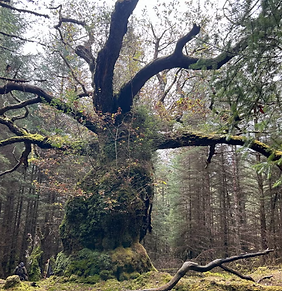
Ancient oak tree. Flora manages to survive in the forest sheltered in a hollow oak tree.

Lissan House in Cookstown, Northern Ireland. The Staples family lived here from the 1600's until the daughter of the last baronet, Hazel Radclyffe-Dolling died in 2006. It featured on the BBC in 2003 and inspired me to write about about the two elderly Armytage sisters, living in the derelict remains of Delavelle Towers.
1821. Henry Delavelle is studying in Switzerland when he hears of his estranged father's death and that he has inherited a vast estate in Surrey, complete with a Medieval hall and an ancient forest.
Henry, the new Lord Delavelle has been raised by his kindly aunt and uncle, and he immediately returns to England to take possession of Delavelle Hall and its verdant mystical forest.
He finds the villagers insular and inward-looking, with tales of a malevolent beast that lives in the forest that they are convinced is a demon. He dismisses their fears as superstitious nonsense and goes in search of the beast which, to his surprise, he catches.
He discovers the beast to be a feral girl who has been living wild in the forest, and he sets about socialising her.
He names her Flora, but he soon develops romantic feelings for her. He tries to build a life for them in his human world, but Flora is unable to adapt and disappears back into the forest.
A broken-hearted Henry spends the rest of life searching for her but he dies unsuccessful.
The estate passes to a childless cousin of his but then the line of the Delavelle's dies out and the estate, along with the title, is eventually sold to William Armytage, a nouveau riche arms manufacturer. Armytage tears down the old Medieval hall and replaces it with an ostentatious neo-Gothic mansion.
Armytage's dreams of establishing a dynasty that lasts as long as the Delavelle's is dashed when his grandson is killed in the First World War. His two unmarried granddaughters live in the house as it crumbles around them, surviving in one small room without electricity.
The decaying and largely derelict house is finally sold to property developers in the 1960's and the remains of the once mighty Delavelle Towers are pulled down.
Large swathes of the ancient forest are cut down to make way for a new exclusive gated community of high-end houses. Then an ancient old oak is uprooted and the mystery of the disappearance of Flora is finally solved.

Gracechurch Street, depicted in 1820. In the background, to the left is the Monument to the Great Fire of London, and to the right is the spire of St Magnus-the-Matyr. Henry Delavelle lives here with his aunt and uncle until inheriting Delavelle Hall.

Cragside, Northumberland. Built by arms manufacturer, William Armstrong in 1855. William Armytage acquires Delavelle Hall and tears down the Medieval structure, replacing it with the ostentatious Delavelle Towers, similar to Cragside.
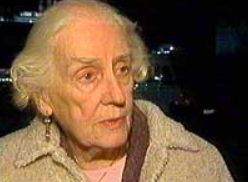
Hazel Ratclyffe-Dolling. She was the last surviving member of the Staples family and lived in the derelict and crumbling Lissan House until her death in 2006.